How to Trim Your Dog’s Nails at Home (Step by Step)
This article contains affiliate links. As an Amazon Associate, Pet Nail Picks earns from qualifying purchases, at no extra cost to you. It's general information, not veterinary advice.
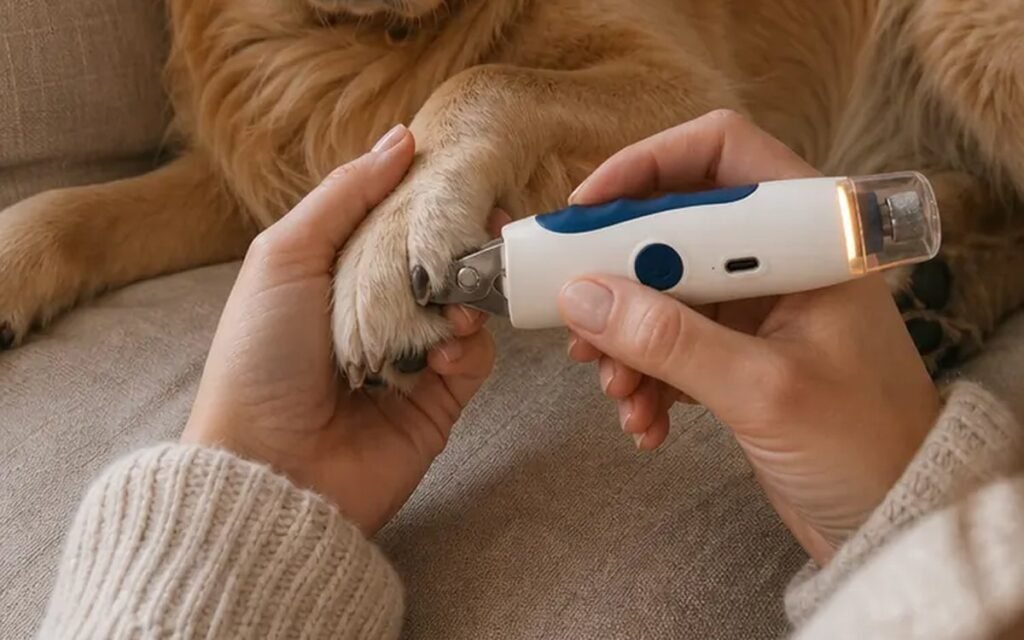
Trimming your dog’s nails at home is mostly about two things: knowing where the quick is, and keeping sessions short and calm. Here’s a simple routine that works for most healthy dogs.
Why it matters
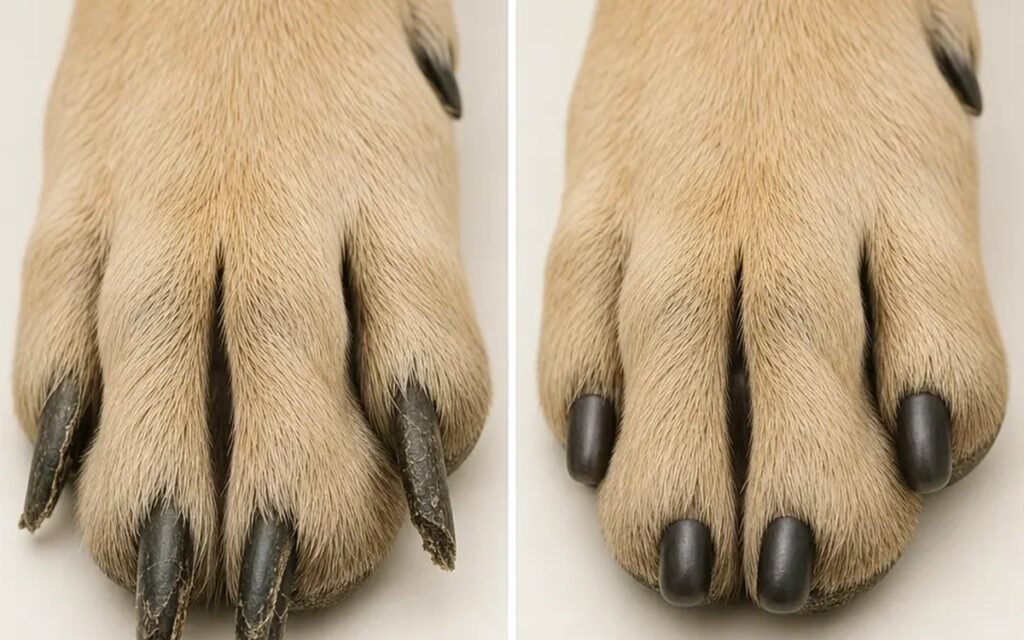
Nails that are too long change the way a dog stands and walks. They can splay the toes, catch on carpets and crack. A good rule of thumb: when your dog stands on a hard floor, the nails shouldn’t touch the ground. If you hear clicking on tiles or wood, it’s time for a trim.
What you need
- A sharp clipper (scissor or “plier” style is the easiest to control). A safety guard helps you avoid taking too much at once.
- A grinder (optional but very helpful) to smooth the edges after clipping.
- Good light. A tool with a built-in LED, or a bright lamp aimed at the paw.
- Styptic powder, or plain cornstarch, in case you nick the quick.
- Small treats your dog loves.
Understand the quick first
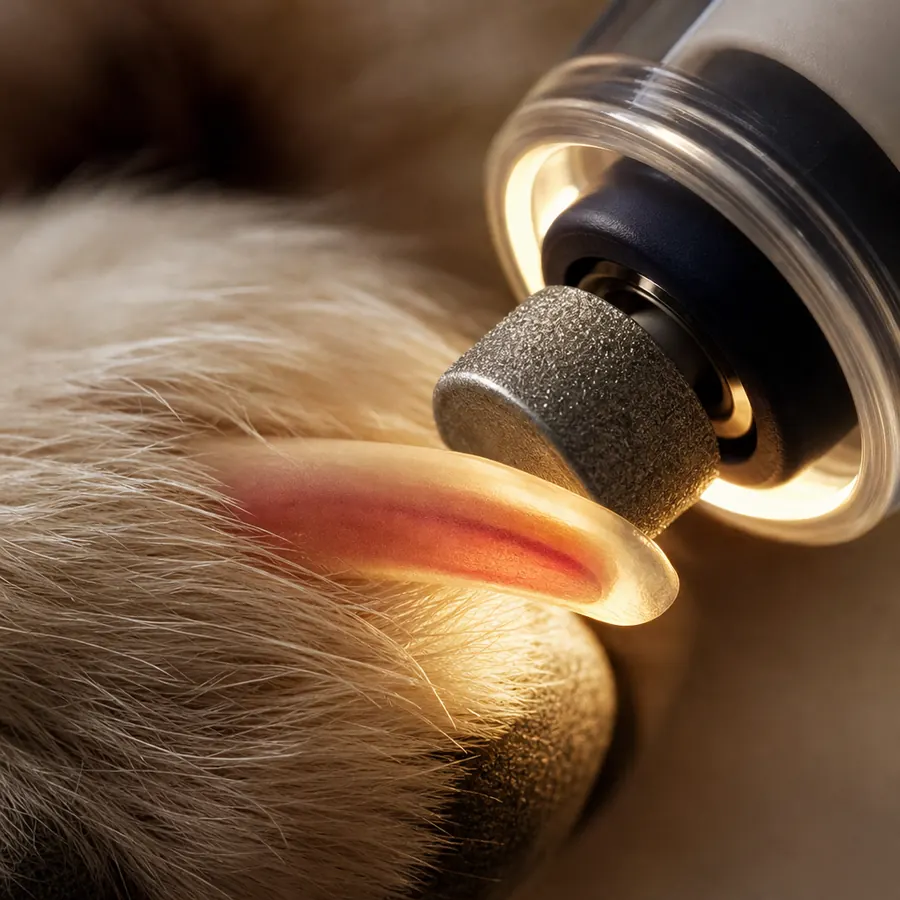
Inside each nail is the quick: a living core with blood vessels and nerves. Cutting into it hurts and bleeds. On light-coloured nails you can usually see it as a pink area inside the nail. On dark nails you can’t, which is why we have a separate guide: How to Find the Quick on Black Dog Nails.
Step-by-step
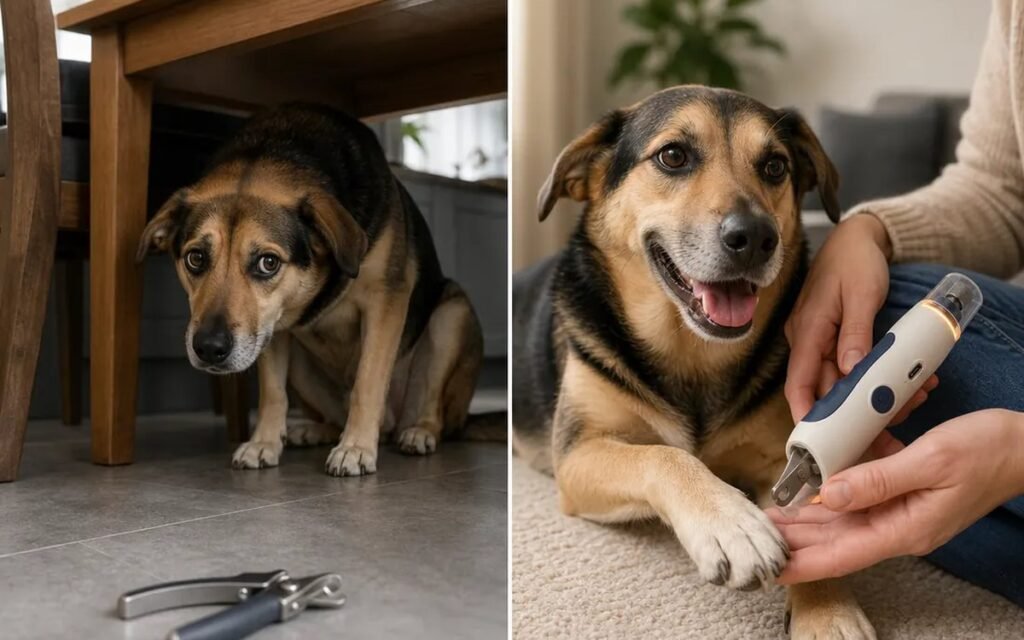
- Get your dog used to the tools. For a few days, let them sniff the clipper and grinder, touch their paws briefly, and reward. If you use a grinder, switch it on near them (not on the nail) and reward calm behaviour.
- Pick a calm moment. After a walk or play, in a quiet room, with your dog lying or sitting comfortably.
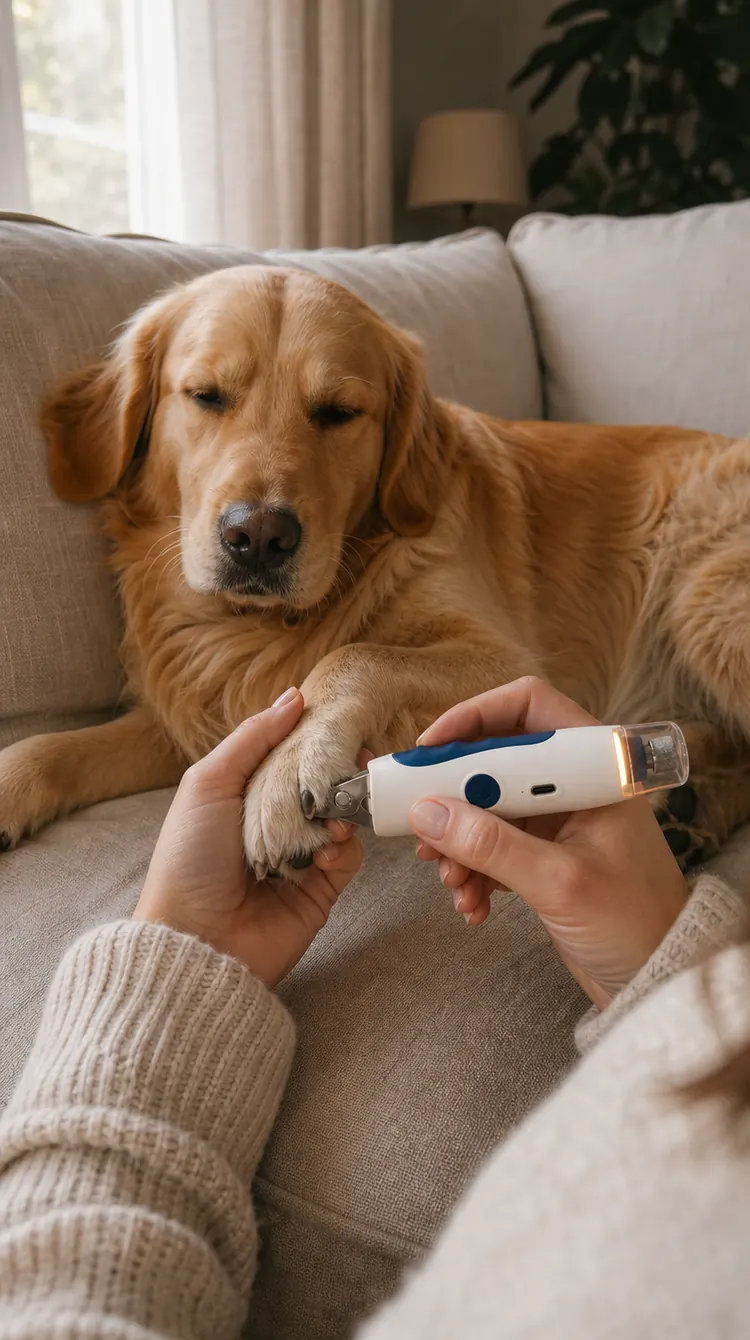
- Hold the paw gently but firmly. Press lightly on the toe pad to extend the nail. Move fur out of the way.
- Find the quick, then clip the tip only. Cut a little at a time, at a slight angle that follows the nail’s natural curve. It’s always better to take three small cuts than one big one.
- Smooth the edges. Use the grinder in short touches of 2–3 seconds per nail, moving around the edge. Long contact heats the nail, so keep it brief.
- Don’t forget the dewclaws. These nails sit higher on the leg, don’t touch the ground and can grow into a curl if ignored.
- Reward and stop early. If your dog gets stressed, stop after one or two nails and finish another day. Progress beats perfection.
How often should you trim?
Many dogs need a trim every 2 to 4 weeks, but it depends on the dog, their activity and the surfaces they walk on. Dogs who walk a lot on pavement wear their nails down faster. Regular small trims are easier for everyone than occasional big ones, and over time they can help the quick recede so you can keep nails shorter.
If you cut the quick
Stay calm: it happens to almost everyone at some point. Press a pinch of styptic powder or cornstarch onto the nail tip and hold gentle pressure for a minute or two. Keep your dog quiet for a while afterwards. If the bleeding doesn’t stop after several minutes of pressure, or the nail is cracked or torn, contact your vet.
When to ask a professional
- Your dog panics, snaps or struggles even after gradual training.
- The nails are very overgrown, curled or growing into the pad.
- A nail is cracked, bleeding or infected.
A vet or groomer can trim overgrown nails safely and show you where to cut on your own dog, which makes home trims much easier afterwards.
Quick recap
- Nails shouldn’t touch the floor when your dog stands.
- Clip small amounts, find the quick first, then smooth with a grinder.
- Keep sessions short and rewarding.
- Have styptic powder ready, and call your vet if bleeding won’t stop.