Dog Nail Grinder vs Clipper: Which Is Better for Your Dog?
This article contains affiliate links. As an Amazon Associate, Pet Nail Picks earns from qualifying purchases, at no extra cost to you. It's general information, not veterinary advice.
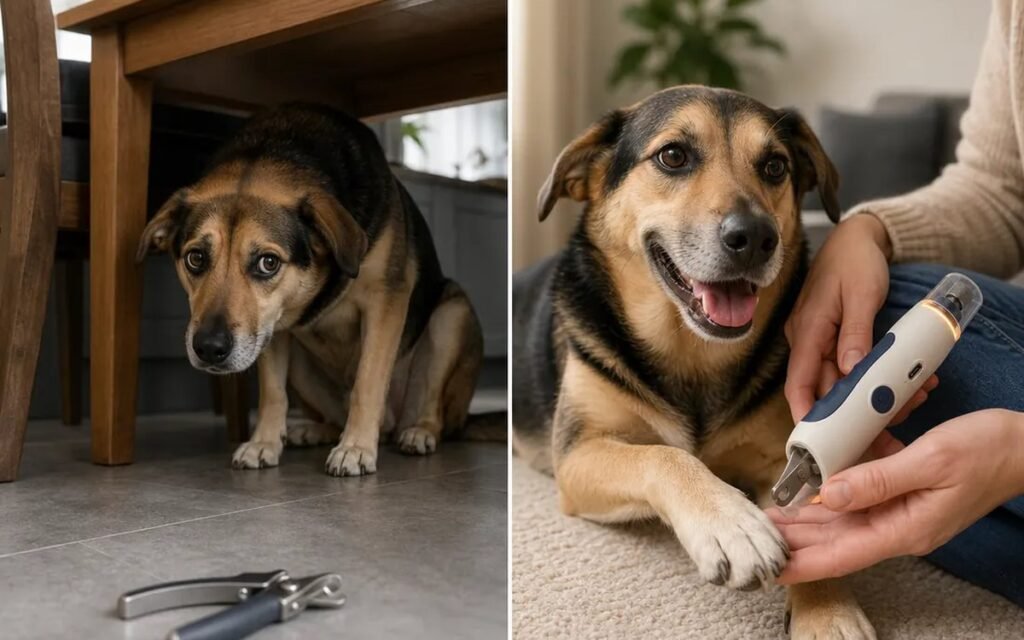
Clippers are fast. Grinders are gentle and precise. Neither is “the best” for every dog: the right choice depends on your dog’s nails, your dog’s patience, and yours. Here’s an honest side-by-side to help you pick, plus the routine most groomers end up using: clip first, then grind.
The short answer
- Choose a clipper if your dog has light-coloured, thin or small nails, hates noise, and you want nail time over in a few seconds.
- Choose a grinder if your dog has thick or black nails, you’re nervous about cutting the quick, or you want smooth, rounded edges with no sharp corners.
- Use both if you can: clip off the long tip, then grind the edge smooth. It’s quicker than grinding alone and safer than clipping alone.
Grinder vs clipper at a glance
| Clipper | Grinder | |
|---|---|---|
| Speed | Very fast: one cut per nail | Slower: a few short passes per nail |
| Control near the quick | Removes a chunk at once | Removes a fraction of a millimetre at a time |
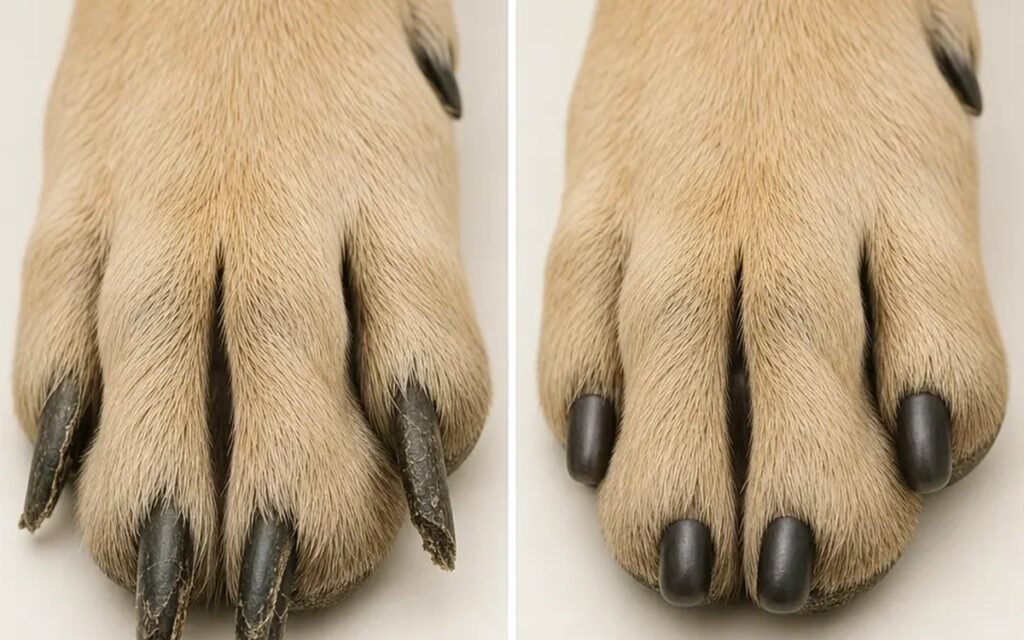
| Finish | Can leave sharp edges or splinters | Smooth, rounded edges |
| Noise | Silent, except a “click” | A buzz, quieter on low-noise models |
| Black nails | Harder: you can’t see the quick | Easier: you take off tiny amounts and watch the surface |
| Thick nails (large breeds) | Needs a strong, sharp clipper | Works well, just takes longer |
| Learning curve | Simple, but mistakes happen fast | Takes a few sessions for your dog to accept the sound |
| Power | None needed | Battery or cable |
When a clipper is the better choice
A sharp clipper is hard to beat for speed. If your dog only tolerates a few seconds of paw handling, one clean cut per nail may be all you can get, and that’s fine. Clippers also suit small dogs and puppies with thin nails, and dogs that are scared of buzzing sounds.
The trade-off is precision. A clipper removes the whole end of the nail in one go, so if you misjudge the length, you can reach the quick, the sensitive living part inside the nail. A blunt clipper can also crush or split the nail instead of cutting it cleanly.
Tip: look for a clipper with a safety guard (a stop that limits how much nail goes past the blade) and keep the blade sharp. Cut at a slight angle, following the natural curve of the nail.
When a grinder is the better choice
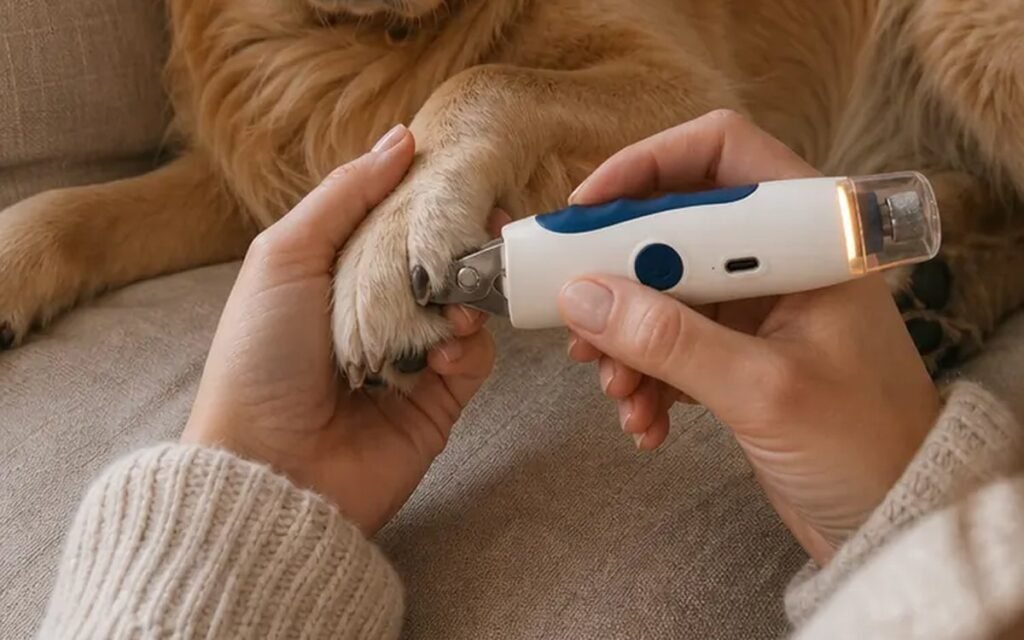
A grinder files the nail down instead of cutting it. Because it removes so little at a time, it’s the more forgiving tool if you’re nervous, and it’s especially useful on black nails, where you can’t see the quick. You simply stop when the centre of the nail changes colour. (We explain exactly what to look for in our guide to finding the quick on black dog nails.)
Grinders also leave a smooth, rounded edge, which means fewer scratches on your legs and floors. The downsides: they take longer, some dogs dislike the vibration and the buzz at first, and long fur near the paw has to be held back so it doesn’t get caught.
Tip: keep each touch to 2–3 seconds per nail, then move on. Grinding one spot for too long makes the nail warm. Start on the lowest speed.
The routine many groomers use: clip, then grind
- Clip only the long, hooked tip with the clipper, staying well away from the quick.
- Switch to the grinder and shorten the nail a little more with short touches.
- Round off the edges so there are no sharp corners left.
- Reward after every paw, not just at the end.
This combo gives you the speed of a clipper and the precision and smooth finish of a grinder. It’s also why 2-in-1 tools, a clipper and a grinder in one cordless unit, have become popular with owners who trim at home.
How to get your dog used to a grinder
Most dogs don’t love the grinder on day one. Introduce it slowly, over several short sessions:
- Day 1–2: let your dog sniff the grinder while it’s off. Treat.
- Day 3–4: switch it on a short distance away for a few seconds. Treat, switch off.
- Day 5–6: touch the grinder’s body (not the stone) to a paw while it runs. Treat.
- Day 7 and on: grind one nail for 2 seconds. Treat. Add a nail each session.
Stop before your dog gets stressed. Ending on a calm note matters more than finishing every nail. For the full handling routine, see how to trim your dog’s nails at home, step by step.
Frequently asked questions
Is a nail grinder better than clippers for dogs?
Not always. A grinder is more precise and safer near the quick, especially on black or thick nails. A clipper is faster and quieter. Many owners get the best result by clipping first and grinding second.
Do nail grinders hurt dogs?
Used correctly, no. Discomfort usually comes from grinding one nail for too long (heat), pressing too hard, or reaching the quick. Short touches on a low speed keep it comfortable.
Is a grinder safer for black dog nails?
Generally yes, because it removes very little at a time, so you can watch the cut surface and stop as soon as a darker dot appears in the centre of the nail.
How often should I trim or grind my dog’s nails?
For most dogs, every 2 to 4 weeks. A good sign it’s time: you hear the nails clicking on hard floors. Dogs that walk a lot on pavement may need it less often. If the nails are very long, small weekly trims help shorten them gradually.
What do I do if I cut the quick?
Stay calm, press styptic powder or cornstarch onto the tip and hold gentle pressure for a minute or two. If the bleeding doesn’t stop after several minutes, or the nail is split, call your vet.
Bottom line
- Clipper: fastest, silent, best for light and thin nails.
- Grinder: gentlest and most precise, best for black and thick nails.
- Clip, then grind: the most reliable routine for a smooth, safe result at home.
This guide is general information, not veterinary advice. If your dog has very overgrown, split or painful nails, ask your vet or a professional groomer.